

 New Brief
8/13/97, 2:14:44PM by NetAttaché Light New Brief
8/13/97, 2:14:44PM by NetAttaché Light





Notes on the Synthesis of FormChristopher AlexanderHarvard University Press, 1964, ISBN 674-62751-2
On page 88, Alexander presents a very interesting diagram. He doesn't name it, but I call it a "unified image" because it combines in one image what he terms the "formal description" and the "functional description". It poses a theoretical design ideal because the single image conveys not only how it works, but what it is. His definitions and descriptions of the self-conscious and the un-self-conscious design processes are remarkably insightful and precisely delineated. You will never think of design in the same way after you read them. The book is dense and wanders into the weeds near the end, but it contains some of the most provocative prose and durable analogies about crafting design solutions ever written. As an indication of its influence, it is also cited by three of the other authors in this bibliography: Heckel, Norman, and DeMarco & Lister. The latter say "[it] is considered a holy book by designers of all kinds." Unfortunately, Notes is now out of print, but absolutely worth a trip to the library or the used book store. Alexander describes a physical model consisting of programmed lightbulbs
to get across the concept of interacting systems and how they disturb each
other. I have long imagined that some enegetic soul should translate Alexander's
design into a program. It would be a fun teaching tool. |






Copyright © 1996 by Cooper Software Inc. All rights reserved.

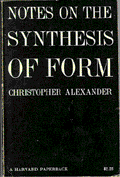 This
is one of the most seminal books written about the design process. Alexander
creates a carefully reasoned case for why design as we know it doesn't
really exist and how we should re-examine the process. He is a professor
of architecture at Berkeley and his opinions have made him somewhat of
a pariah in the scholarly world of architecture. His thesis is that good
design only comes about by discarding bad design and then doing it over.
This is empirically correct but anathema to the establishment. Amusingly,
the findings in the book are rejected by none other than the author himself
in the preface to the second edition, but I suggest we just attribute that
to artistic pique and ignore it.
